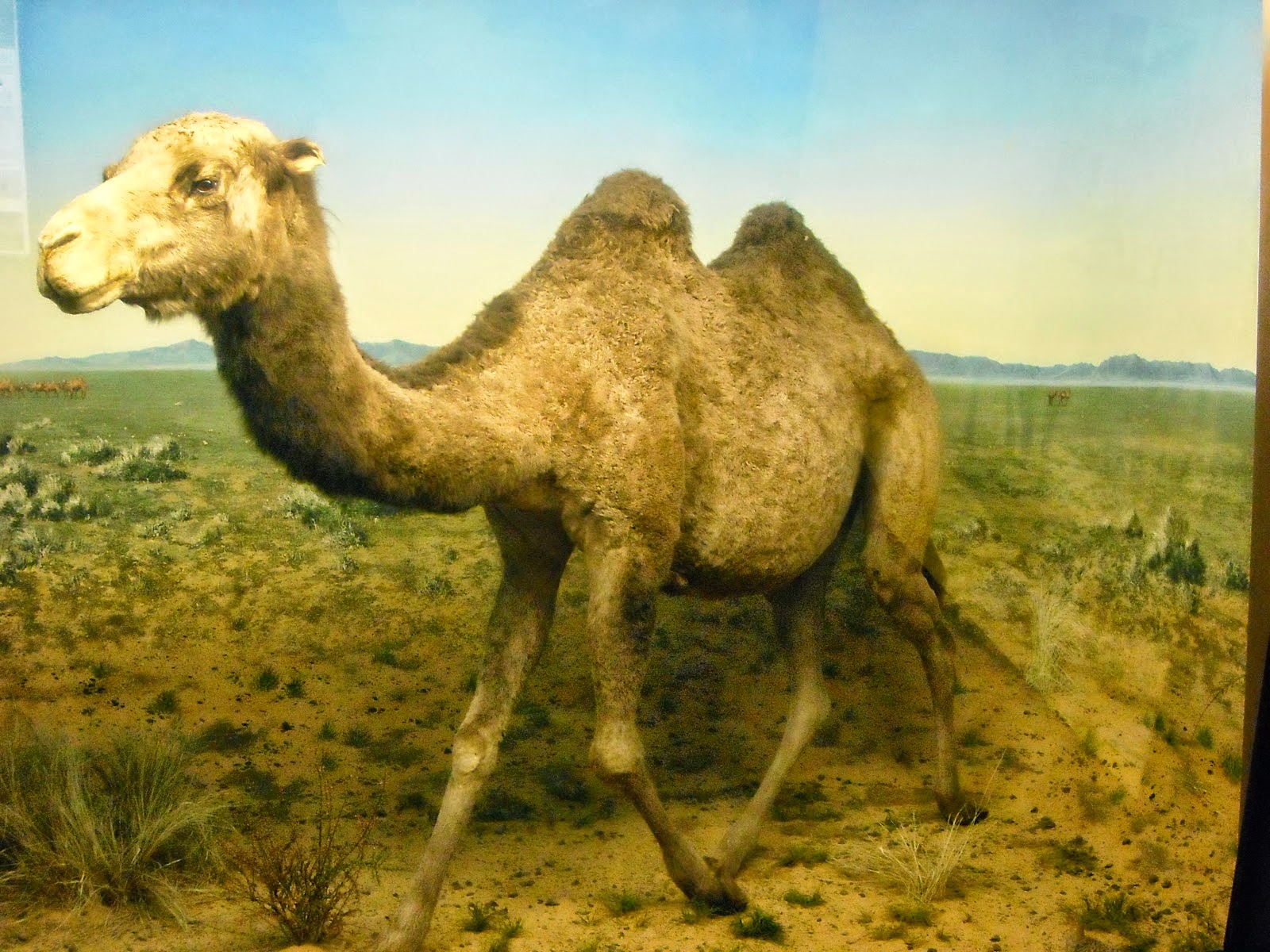
The dioramas in the American Museum of Natural History's Hall of African Mammals are like magic windows, glowing internally with reflected light.
Like everything else in New York, the sheer scale of the Hall is impressive. The dioramas are bigger than any I'm used to, and most of them contain a number of individual specimens, not just one or two. And there are two levels!
Not to mention the centrepiece of the Hall, a herd of African elephants. One of them was shot by Teddy Roosevelt, although I don't know which one.

The Hall was the brainchild of taxidermist Carl Akeley, who was worried about the disappearance of Africa's wildlife as agriculture and civilization spread across the continent. He wanted to ensure that there was some record that these animals had existed.
He also wanted to use the Hall to drum up public support for conservation. It worked! Akeley himself was instrumental in persuading the King of Belgium to create Virunga National Park to protect the mountain gorillas.
Unfortunately, the northern white rhinoceros, pictured in the diorama above, hasn't been so lucky. It was reported just last December that one of the last six individuals has died.

The gerenuk, my favourite antelope.
Akeley was, by all accounts, a badass. He was once attacked by a leopard and killed it with his bare hands. He also more or less invented modern taxidermy. This photo from LIFE magazine (24 May 1937) explains the process better than I ever could:

The attention to detail in sculpting the muscles really shows. Look at the subtlety of the facial muscles of this Grevy's zebra:

Equal to Akeley's desire to preserve Africa before it was gone forever, was his desire to bring Africa to you. In an age before David Attenborough specials, it wasn't easy for an average North American to see African wildlife in its natural habitat.

Detail of gemsbok diorama
To that end, every diorama was based on an actual location. (Museum artist Stephen Quinn visited the site of the gorilla diorama a few years ago.) Fanatical about accuracy in every detail, Akeley and his team catalogued all the plants in the area, and collected everything from dirt to fallen leaves, all of which ended up in the dioramas.

Colour photography wasn't in widespread use yet, and anyway, cameras don't capture colour in the same way that your eye does. So artists painted "colour notes" in the field so that they could accurately reproduce the colours when they got back to New York. Above are the colour notes for the plants in the mandrill diorama (source).
 |  |
 |  |
Here you can see the lighting setups for dioramas representing two very different environments and lighting conditions -- bongos in a shadowy bamboo forest, and gemsboks in the baking Kalahari desert. The lights are mounted behind a "window" right above the glass panel that you look through.
The bongo diorama also contains a small mirror, hidden from view, that reflects a gleam into the bongos' eyes.

This diorama, of hunting dogs at sunrise, features my favourite lighting effect in the whole exhibit. One main light shines onto the backdrop, illuminating the spot where the sun is rising above the horizon. The effect is subtler than it appears in this photo; in person, it really does look like the glow is emanating from the rising sun.

New York Times, 17 May 1936
Several times during my visit to the Hall, I saw people standing in front of the gorilla diorama, taking pictures of it with their cell phones. Silhouetted against the glass, elbows out to their sides, their pose looked identical to that of the big male gorilla in the centre of the diorama. I wish I'd gotten a photo of that.
Carl Akeley died in 1926, before the Hall was completed. He was on a trip to collect material for the gorilla diorama. He died, and was buried, very close to the location depicted in that diorama, a location he considered to be the most beautiful place in the world.

Libyan desert
If you want to see more of Akeley Hall of African Mammals, this Flickr user has some awesome photos of the dioramas taken with a fisheye lens. And this amazing online exhibit on the AMNH website has a ton of archival materials relating to the Hall.

Colobus monkeys
Sources:
Preston, D.J. 1986. Dinosaurs in the Attic: An Excursion Into the American Museum of Natural History. Ballantine Books, New York, 308 pp.
Quinn, S.C. 2006. Windows on Nature: The Great Habitat Dioramas of the American Museum of Natural History. Abrams, New York, 179 pp.